 Share with the world 🙏
Full Funnel MSP Marketing Methodology: Episode 4 Transcript
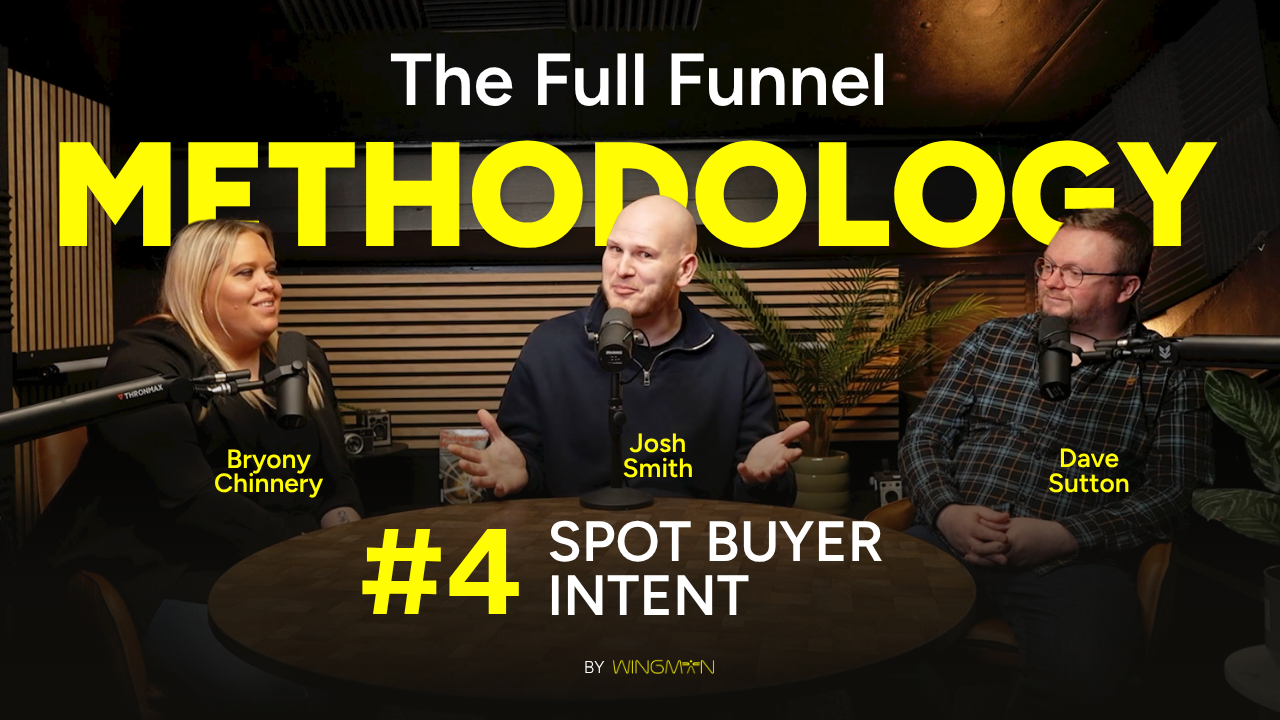
In the fourth episode of our Full Funnel MSP Marketing series, Dave, Bryony and Josh look at the point where marketing hands over to sales: intent. Once a prospect has engaged with your brand enough, it’s time to act. They cover what intent data looks like, how to follow up without coming across as pushy, and how to build a lead score that tells you when a prospect is ready for a conversation.
In this episode:
- What intent data is and how MSPs can use it
- How to follow up on intent without being pushy or “creepy”
- How to monitor, quantify and lead score intent over time
When awareness becomes intent
Dave (Founder & MD, Wingman): There comes a point where a prospect has engaged with your brand enough. They’ve visited the website enough times, clicked on enough emails, and shown enough interest that you need to act and bring in some sales tactics to follow up. We use ourselves as a prime example of this all the time, because it’s exactly what Josh does for our business. So what does intent data look like, Josh, and what should you do with it?
Why prospects don’t enquire straight away
Josh (Channel Manager, Wingman): It goes back to what we said at the very start of the series. It’s never one single action. You can get to the top of Google’s rankings or show up in one of the large language models, and someone still might not enquire in that moment.
There are lots of reasons why. I’ve spoken to plenty of MSPs and vendors who told me they didn’t enquire because another email came in, or the vet called to say their dog was ready to be picked up. Then they forgot what they were doing.
What intent data looks like for an MSP
Josh: We use lead tracking software on the Wingman website and in our emails. It shows us which pages people have looked at, when they arrived on the site, how long they stayed, and sometimes where they came from.
The key is using that data in the right way. Calling someone the moment they land on your website isn’t it, because nobody wants that. It’s about following up properly and controlling the narrative.
Controlling the narrative before they look elsewhere
Josh: Otherwise they go away and look at 10 other MSP websites over the next week. Intent data gives you the chance to reach out first, whether that’s by email, a call, or connecting on LinkedIn. You can say something like, “You were looking at our cybersecurity page. Is that a particular interest or concern for you right now?”
Isn’t following up on intent a bit creepy?
Bryony (CMO, Wingman): Isn’t that a little bit creepy, though? Don’t people find it that way?
Josh: I have had that response once. He was a bit unpleasant at the time, saying it wasn’t him on the website and that I was pushing him for a sale. Then he phoned me the next day to apologise. It turned out it had been his wife, who was also his marketing manager. About a week later I had a great conversation with them both, so it really does work.
Timing your follow-up: why a day or two later works best
Josh: It works if you do it the right way. Some people tell me they get an automatic notification when someone’s on their website and ask whether they should call straight away. That’s not what prospects want. It can look a bit desperate, as if you’re sitting there with nothing better to do.
Following up a day or two later is the better approach. You’re still getting in before they go to another MSP’s website, so yours is the conversation they’ve had. You’ve steered it towards what you can do for them, and you can build from there.
How to monitor and quantify intent
Bryony: So how do you monitor or quantify intent? It sounds like quite a high-level thing, so how do we make it more real?
Dave: You have to build up the picture over time. Sometimes you’ll get lucky and businesses will land on your website that aren’t in the audience data you’re reaching out to. If you match your email list against your tracked website visitors, you’ll find people in there you’re not emailing.
That’s where, as Josh said, you can look at the source. Did they find you through AI search, through Google, or through something on social? Maybe something was shared by a sister business or a referral, or even passed between prospects because someone saw something they knew a friend would relate to. Understanding that gives you real sales intelligence to use in your outreach.
Help people buy rather than selling to them
Dave: It isn’t about being pushy. As Josh said, nobody wants to be sold to. You want to help people buy. That comes down to tracking intent in a timely way and following up the right way, being proactive to show you’re not desperate for the business but you are hungry. You have the availability and the appetite to help them.
Why nurturing intent leads matters
Dave: Then you put them into a sequence of ongoing engagement to nurture them. Chances are 75% or more won’t respond to your first follow-up after you spot them as an intent lead. But they might if you keep nurturing them, especially if they’re already in your campaign.
Hopefully most of them will be. You’re already running email and ads, reaching out to these people, meeting them at events, and they’re seeing you speak or network in certain circles. Then they come and check you out. That’s why it matters, as we said earlier in the series, that your website is consistent with every other form of your marketing, so it says the same thing when they do their due diligence.
Lead scoring: turning intent into a conversation
Dave: They might come back and visit multiple times, and that builds up a picture over time. What did they do in email? What did they do on the website? What did they say on the phone when you called? Did they connect on LinkedIn?
All of that gives you a set of points to lead score the opportunity. The more activity and engagement, the higher the score and the higher the intent. Ultimately, that’s what gets a call to action in front of them that creates a conversation.
MSP marketing intent FAQs
What is intent data in MSP marketing?
Intent data shows how prospects are engaging with your MSP: which pages they visit, how long they stay, what emails they click and where they came from. It helps you spot who’s actively interested.
How quickly should an MSP follow up on intent data?
Not instantly. Calling the moment someone lands on your website can feel desperate. A day or two later lets you follow up before they look elsewhere, without seeming like you were waiting for them.
Isn’t following up on website visits creepy?
Not when it’s done well. A helpful, relevant follow-up about what they were looking at positions you as the MSP that helps people buy, rather than one that pushes for a sale.
How do MSPs lead score intent?
By building up a picture over time from email engagement, website visits, phone conversations and LinkedIn activity. The more engagement, the higher the score, and the stronger the case for putting a call to action in front of them.
Next up in the series, we’ll look at what happens once that conversation starts. In the meantime, if you’d like help turning your own intent data into sales conversations, book a free MSP Marketing Pre-Flight Brief with the team.