 Share with the world 🙏
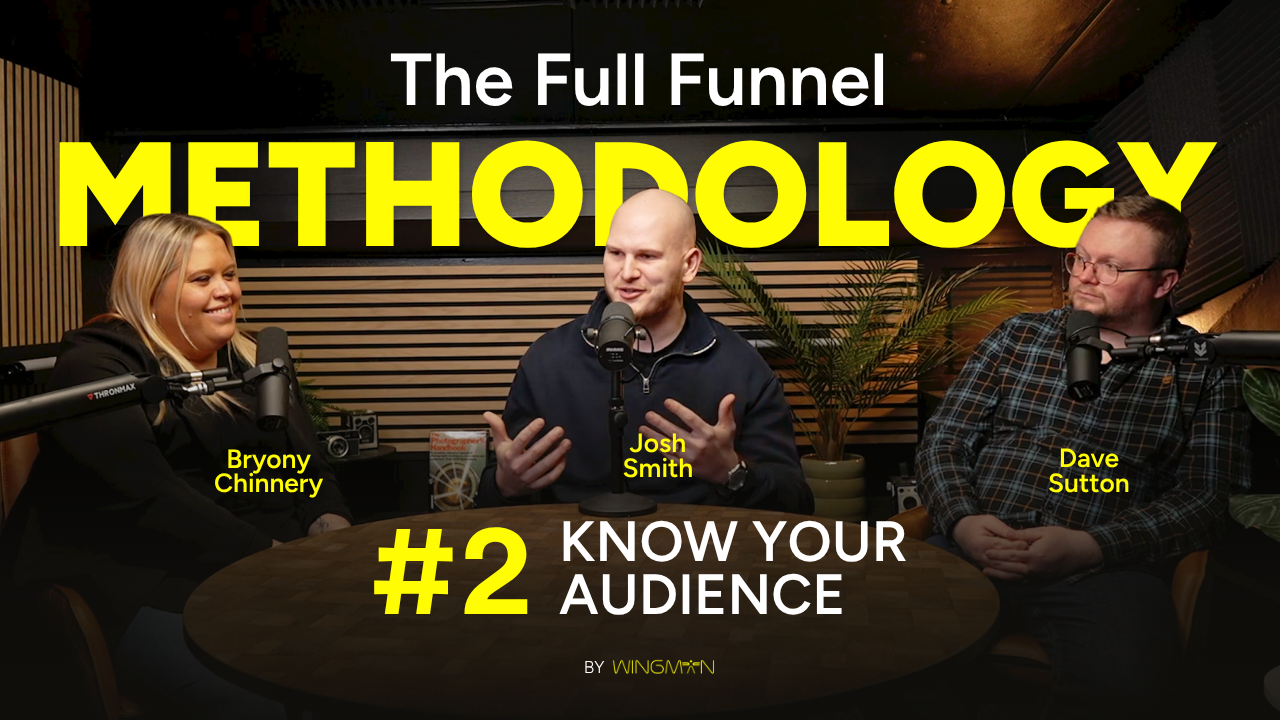
Full Funnel MSP Marketing Methodology: Episode 2 Transcript
In the second episode of our Full Funnel MSP Marketing series, Dave, Bryony and Josh talk through the first real building block of the funnel: defining your MSP’s target audience. They cover how Wingman’s discovery process works, why storytelling beats “we’re a friendly team”, and the trust assets every MSP needs before going to market. If you missed it, catch up on Episode 1 here.
In this episode:
- How to define your MSP’s target audience through proper discovery
- Why your stories, not your USPs, are what set you apart
- Why your website and video testimonials are your most important trust assets
Why MSPs struggle to define their target audience
Josh (Channel Manager, Wingman): A lot of the MSPs we speak with are at a point where they feel a bit lost. They don’t have a clear understanding of who their audience is, what their message is, or how they differentiate themselves. So we have to take it back to step one and talk about their foundations. Once a prospect has had that conversation with me and is ready to move forward with Wingman, they come over to your team and delivery begins. How do you approach the audience side of things?
Bryony (CMO, Wingman): Some MSPs will have an audience scoped out, or think they do, but we always take it back to basics as far as possible. We sense-check everything they have, look at what opportunities might be there, and see what we’ve got to work from.
How Wingman’s discovery process shapes your MSP marketing
Bryony: Our approach at Wingman is to spend real qualitative time with new clients. We get to know you and what makes you tick. That might sound one step removed from figuring out your audience, but understanding the components that make up your business helps us match you with the audience that’s going to work for you.
We go through a full discovery process, asking everything from how your business got started and what your name means, right through to the services you offer and your plans for the future. We’ll also ask about your business objectives and goals, because the more closely your marketing aligns to them, the better it will work for you.
From there, we analyse who we think your MSP’s target audience is alongside who you think it is, and look at how the two pair together. That should inform your marketing plan, particularly the tactics you use, because different tactics and different messages work for different audiences. Getting this right at the beginning means your plan has your audience in mind from day one.
As we touched on earlier in the series, it’s easy to assume you know what people want without really putting yourself in their shoes.
Finding your MSP’s secret sauce
Dave (Founder & MD, Wingman): Defining your audience is a much bigger process than most people expect when they get started. And no one likes to blow their own trumpet. So many businesses tell us there’s nothing special about them, or that they’re the same as everyone else in their industry. That may be true on the surface, but there’s always some secret sauce in the business that we need to uncover to help them tell their story better. How do we go about finding that and making use of it?
Why storytelling humanises your MSP brand
Bryony: People forget that everyone loves storytelling. You’re probably watching this right now because we’re telling you our story, rather than you reading it on our website. Blogs have their place, especially for search, but the more personality people can see, the better, and stories are one of the key drivers of that.
Think about telling a friend about something in the pub. You take them on the journey with you: who was there, what it looked like, what happened, maybe a joke along the way. That’s what makes people want to engage. So we work hard to draw those stories out of our clients and help them share them with the world, because there’s no better way to engage people.
People buy from people
Josh: It humanises the business, too. It’s easy for MSPs to be faceless, working behind the scenes on important infrastructure. But going back to trust, for businesses to buy into you, even in today’s AI and data-driven world, people still buy from people. Stories of real experiences are what resonate with an audience.
Dave: Exactly. Saying your unique selling point is a friendly team doesn’t cut it. We’re not questioning that you are, but everyone else is saying it too, whether it’s true or not. You need something different to say, and your stories are what set you apart. They’re what’s in your armoury. Even Josh, when you’re selling for us, a lot of your anecdotes are about the team, aren’t they?
Josh: Definitely. After speaking with me, prospects often ask who they’ll actually be working with. It’s probably the same for MSPs, where your first-line team are some of the most important people in the business, because they’re who your clients speak to first. I’m asked all the time what the team behind me is like, what their expertise is, and whether they’ll enjoy working with them day to day. People buy from people, and people work with people too. In any service business, it’s vital to have those anecdotes and a team people want to work with.
Building your MSP’s trust assets: starting with your website
Dave: So to close off this part of the funnel: you’ve chosen an audience you have success stories in, you have a strong message built on problems you’ve solved in that market, and you’ve uncovered your secret sauce. That’s much easier with an external party asking the difficult questions, because it’s hard to ask them of yourself. Once you’ve got all that, how do you build the foundations? What trust assets do you need before going to market?
Bryony: Right at the beginning, you need to organise your shop front. Not a physical one, but your digital one. The first engagement people have with you is likely to be your website, possibly your social profiles too. Your website is where everyone comes back to validate what you’re saying, check you’re real, and vet you before they buy.
So it needs to be in good working order, give the right impression, and carry messaging that resonates with your audience. Visitors need to see themselves as your target audience. That’s always where we start, and there are other things you can do to add credibility too.
Why video testimonials are the best credibility an MSP can have
Josh: One of my favourite parts of working at Wingman is interviewing our clients’ clients. I speak to lawyers, attorneys, accountants, CPAs and more across the English-speaking world about why they love their MSP so much. Why did they start working with them? Why do they stay? What’s the personal side of the relationship like?
I ask those questions because they reflect the pain points that bring people to an MSP’s website in the first place, so the video needs to address them. And when it’s a specific audience talking about their own problems, it lands even harder. Solicitors, for example, notoriously hate downtime, because they can’t bill clients while their systems are down.
You can say lovely things about yourself, and written case studies are great, but having a client front and centre on your website, talking on video about how much they value you, is the best credibility you can have. You can see some of the MSPs we’ve worked with on our Happy Clients page.
Dave: Absolutely. It lets prospects put themselves in that client’s shoes. They can almost picture themselves in that position, saying those same things. The power of the video testimonial isn’t going away.
MSP target audience FAQs
How do MSPs define their target audience?
Start with discovery: your history, services, strengths and business goals. Then compare who you think your audience is with where you already have success stories, and build your marketing plan around where the two meet.
What makes an MSP stand out if it offers the same services as competitors?
Your stories. Claims like “friendly team” are used by everyone, but real anecdotes about your people and the problems you’ve solved for clients are unique to you.
What trust assets does an MSP need before marketing?
A website that speaks directly to your target audience, supported by credibility builders such as case studies and, above all, video testimonials from happy clients.
Next up in the series, we’ll move further down the funnel. In the meantime, if you’d like help defining your own audience, book a free MSP Marketing Pre-Flight Brief with the team.