 Share with the world 🙏
MSP marketing has a habit of stopping short. MSPs marketing themselves sometimes put real effort into generating interest, then quietly hope the sales side sorts itself out. It usually doesn’t – and that gap between a marketing lead and a closed deal is where most of the revenue goes missing.
Dave Sutton, our Founder, recently sat down with Danny Boyle of DB SalesPilot, to dig into exactly that gap – how the MSP sales and marketing funnel actually works, and where it breaks down. Danny’s spent 20 years in sales, the last 12 specifically in the MSP space, and now runs sales outsourcing and coaching for MSPs through DB SalesPilot. Between them, they walked through the funnel end to end, from first touch to account management. Here are the key points, with their own words throughout.
Where It Starts: Marketing and Sales Are One Journey, Not Two Departments
The core problem, as Danny put it, is that businesses treat marketing and sales as separate functions instead of one connected process:
“Just solely doing one of either marketing or sales will not fix growth on its own. Usually the handover between the two is where the revenue gets lost.”
His shorthand for the split: marketing gets someone to raise their hand, sales discovers whether it’s actually a business and a problem worth solving. Both need to be pointed at the same target, measuring the same things, or – as Danny explained – you end up with marketing claiming 100 leads while sales only logs 10 conversations from that same pool. Nobody’s wrong. They’re just measuring different things.
Qualifying a Lead: BANKOUT
Before chasing volume, Danny argues MSPs need a consistent qualifying framework. He uses an acronym he calls BANKOUT – seven details every prospect needs to reveal at some point in the cycle:
- Budget
- Authority (who the actual decision-makers are)
- Need (the real problem, translated from technical into emotional terms)
- K/Competition (who else is in the running)
- Opportunity size (per seat, per device – however it’s measured)
- Unique reason they’d choose you (you as an individual, the company, or the product)
- Timeline
The catch, as Dave pointed out, is that Brits in particular are reluctant to hand over budget or a firm timeline early. Danny’s take: you won’t get all seven points on one call – trying to forces a rushed, transactional conversation instead of a relationship. It might take several calls, emails, or months to get the full picture, which is exactly why sales cycles for MSPs can run 90 days or more.
What Counts as a “Lead” (And Why the Word Is a Problem)
Dave flagged something most MSPs get wrong from the start: conflating a referral with a cold lead.
“The word lead is almost a bit of a dirty word in the MSP space, because I think everyone has a different perception of what is a lead.”
A referral typically arrives 80–90% convinced already – someone they trust has vouched for you, so the emotional groundwork is largely done. A cold lead at the top of the funnel is a completely different animal, with none of that inferred trust. Dave calls this the “trust thermometer” – most people sit somewhere between icy cold and referral-warm, and the number of touchpoints needed to move them up that scale varies enormously.
Danny’s reframe: stop calling them leads, start calling them conversations. It shifts the mindset from a one-off contact to an ongoing relationship you’re building trust in over time.
Mapping the Funnel
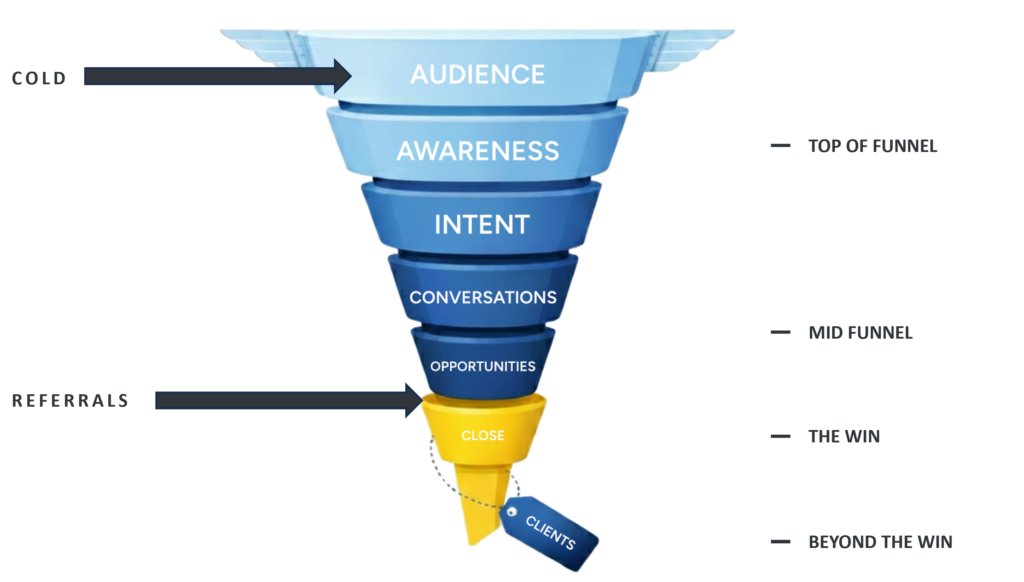
Dave walked through our own funnel model at Wingman, which starts before the funnel technically begins – with the ICP (ideal customer profile). Defining who you’re actually trying to reach, by size, industry, geography, or regulatory nuance, is what makes every touchpoint after it relevant instead of scattergun.
From there:
- Awareness – cold outreach, content, ads, or organic discovery. This is where MQLs (marketing qualified leads) get generated: someone attends a webinar, downloads an asset, or engages repeatedly enough to show intent.
- The marketing-to-sales handoff – once someone’s shown enough buying signal, there’s a legitimate reason for a salesperson to step in.
- Sales engagement and qualification – this is where BANKOUT comes into play, and where marketing should keep supporting sales with case studies, testimonials, and content rather than dropping off.
- Account management and retention – the funnel doesn’t end at the signature. Danny was clear that neglecting this stage is one of the most common – and costly – mistakes MSPs make.
Danny summed up the philosophy behind the whole thing:
“Customers continue buying because trust continues growing. It’s one customer journey, not two departments.”
Speed and Timing Matter More Than People Think
One of the more concrete takeaways: response speed to a hot lead has an outsized effect on conversion. Danny referenced a 5-minute SLA he’d worked under previously, where any website lead got a call within five minutes – carrying an 80% success rate for actually reaching the person.
Dave connected this to the reality of most MSP sales conversations starting from pain – an outage, a bad experience with an incumbent provider – and pain fades fast once the immediate problem is resolved. Acting while the iron’s hot isn’t optional; it’s often the difference between a closed deal and a prospect who quietly goes cold again.
The Numbers: Reverse-Engineering Growth
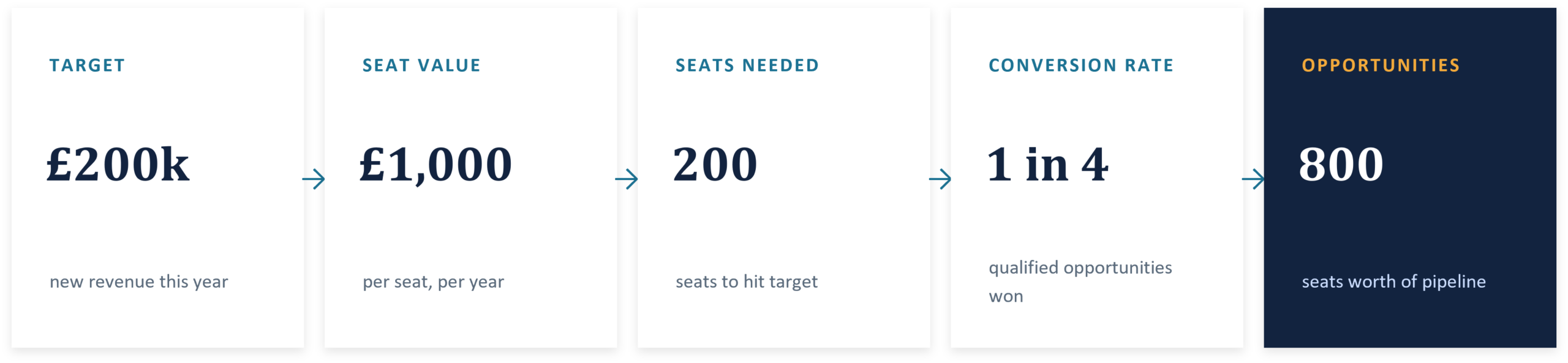
Danny’s approach to setting realistic growth targets is to work backwards from conversion data rather than picking an arbitrary goal:
“Reverse engineering is where it’s at. We need to understand a few regular items first before we even start growing, because it’s very easy to say we need to grow, but we need to put a methodology to the madness.”
His rough industry benchmark: a 25% close rate on qualified opportunities, and around a 20% success rate moving prospects from unqualified to qualified. Put together, winning one new customer a month means needing roughly 20 opportunities in the pipeline feeding that process. It’s a useful reality check for MSPs who set growth targets without first knowing their own numbers – average deal size, win rate, and sales cycle length.
Don’t Forget the Account Management Stage
Danny was blunt about this being the most commonly ignored part of the funnel:
“A lot of times that I’ve been working with MSP over the years is they will actively choose to ignore this section because the customer is paying and they don’t hear anything.”
The cost compounds – missed cross-sell and upsell opportunities, customers left on decade-old legacy pricing, and referrals that never materialise because nobody kept the relationship warm after the deal closed. Multiply a small revenue leak across 100+ customers and it becomes a serious number.
Getting Started
Before investing more in lead generation, both Dave and Danny suggested starting closer to home:
- Look at your existing customer base and account management first – there’s often untapped white space there.
- Get full visibility of your sales cycle. Know what happens to a lead the moment it comes in, rather than letting it sit in an inbox.
- Know your numbers: closure rate, average deal size, and how much of your pipeline is referral versus cold.
- Be honest about resourcing – who’s actually doing the selling, and do they have the time and support to do it properly.
As Dave put it, MSPs that invest in lead generation before they’ve got the rest of the mechanism in place often end up with leads they’re not ready to convert. The funnel only works end to end.